
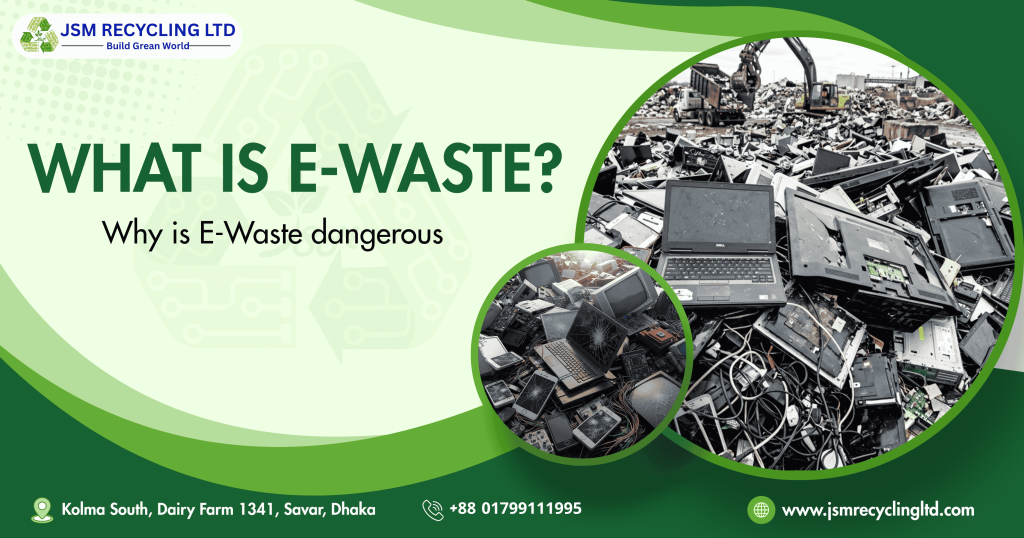
What is e-waste? If you’ve ever wondered what to do with your old phone, broken laptop, or dusty television — this article is written for you. E-waste is one of the fastest-growing environmental crises in the world, and Bangladesh is right in the middle of it.
Every year, millions of electronic devices are discarded across the country. Most of them end up in landfills, open fires, or the hands of informal recyclers who have no idea how dangerous these devices truly are. The consequences — for our health, our water, and our future — are serious.
But here’s the good news: with the right information and the right partners, this problem is solvable. Let’s start from the beginning.
What is E-Waste?
E-Waste Definition in Simple Words
E-waste, short for electronic waste, refers to any discarded electrical or electronic device that is no longer useful or wanted. The full term is electronic waste, and it covers everything from smartphones and computers to refrigerators and medical equipment.
In simple terms: if it runs on electricity and you’re throwing it away — it’s e-waste.
The electronic waste meaning goes beyond just “old gadgets.” These devices contain a complex mix of materials, including valuable metals like gold and copper, as well as highly toxic substances like lead, mercury, and cadmium. That combination makes e-waste both an economic opportunity and an environmental emergency when not handled properly.
Common Examples of E-Waste
You probably have e-waste sitting in your home right now without realizing it. Common examples include:
- Old mobile phones and smartphones
- Laptops, tablets, and desktop computers
- Printers, scanners, and photocopiers
- Televisions and monitors
- Refrigerators, washing machines, and air conditioners
- Electric kettles, irons, and fans
- Batteries, chargers, and power banks
- Medical devices like X-ray machines and monitors
- Industrial equipment and control panels
If it has a plug, a battery, or a circuit board — it counts.
Types of E-Waste You Should Know
Understanding the e-waste types helps us realize just how wide the problem really is. Experts and organizations like the Global E-Waste Monitor classify electronic waste into several major categories.
Large Household Appliances
This includes refrigerators, washing machines, air conditioners, microwaves, and dishwashers. These are bulky items that many people leave on the street or sell to scrap dealers without knowing the risks involved. They often contain refrigerants and insulating foam that can release greenhouse gases if not handled correctly.
IT & Telecom Equipment
This is the fastest-growing category in Bangladesh. It includes:
- Laptops and desktop computers
- Mobile phones and smartphones
- Routers, modems, and servers
- Keyboards, mice, and hard drives
These devices are especially dangerous because they hold your personal and business data even after you stop using them.
Consumer Electronics
Think televisions, cameras, audio equipment, and gaming consoles. Older CRT televisions are particularly hazardous — each one can contain up to 4 kg of lead inside the glass.
Industrial & Medical Equipment
This includes factory machinery, hospital equipment, and laboratory instruments. These are often overlooked in discussions about e-waste but can contain extremely hazardous materials if improperly disposed of.
Why is E-Waste Dangerous?
This is the most important section for many readers — and the answer may surprise you. E-waste is dangerous not just to the environment, but directly to you and your family.
Harmful Effects of E-Waste on Human Health
The harmful effects of e-waste on human health are well-documented. According to a report by the World Health Organization (WHO), exposure to toxic substances in e-waste is linked to:
- Lead poisoning — causes brain damage, kidney failure, and developmental issues in children
- Mercury exposure — damages the nervous system and kidneys
- Cadmium — A toxic heavy metal found in batteries and electronic waste that can harm human health and the environment.
- Brominated flame retardants — disrupt hormone function and can cause cancer
- Arsenic — linked to skin lesions and multiple cancers
Informal workers who burn or acid-strip e-waste to recover metals are most at risk. But nearby communities — and especially children — are also exposed through contaminated soil, air, and water.
Why is e-waste dangerous to human health? Because it doesn’t stay in one place. Toxins from discarded devices leach into groundwater, float in the air, and enter the food chain. You don’t have to work with e-waste to be harmed by it.
E-Waste Impact on the Environment
The e-waste impact on environment is wide-ranging and long-lasting:
- Soil contamination: Heavy metals seep into the ground and can remain there for decades
- Water pollution: Electronic waste pollution contaminates rivers and groundwater used for drinking and farming
- Air pollution: Burning electronic waste releases toxic chemicals like dioxins and furans, causing serious air pollution and environmental harm.
- Loss of biodiversity: Contaminated ecosystems harm fish, birds, and plants
How is e-waste harmful to the environment? Simply put, the toxic materials inside electronics don’t disappear when we throw them away — they transform into invisible poisons that enter our natural systems.
The Hidden Danger — Your Data on Old Devices
Here’s something most people in Bangladesh don’t think about: your old phone or laptop still contains your data.
When you sell your old device to a roadside dealer or hand it to an informal recycler, your photos, passwords, bank account details, contact lists, and business files may still be fully recoverable — even if you did a basic factory reset.
For businesses, this is a serious legal and financial risk. Customer data, employee records, and confidential documents can be extracted from improperly disposed hard drives. That’s why certified data destruction — not just recycling — is a critical part of responsible e-waste disposal.
The E-Waste Crisis in Bangladesh
How Big is Bangladesh's E-Waste Problem?
The e-waste problem in Bangladesh is growing rapidly. According to data from the Global E-Waste Monitor 2026, Bangladesh generates approximately 400,000 metric tons of e-waste annually, yet formal recycling rates remain critically low — estimated at less than 3% of total generated waste.
Bangladesh’s fast-growing middle class, increasing smartphone penetration, and rapid technology turnover are driving e-waste volumes higher every year. As devices become cheaper and more accessible, more of them are also being discarded faster.
The Bangladesh Department of Environment (DoE) has acknowledged the e-waste crisis as a major environmental threat. The government passed the Hazardous Waste and Ship Breaking Waste Management Rules (2011) and later updated guidance, but enforcement and formal infrastructure remain serious challenges.
What Happens to E-Waste in Bangladesh Right Now?
The reality on the ground is sobering. Most e-waste in Bangladesh currently ends up in one of three places:
- Street scrap dealers — who buy old devices for parts or metal weight, with no environmental controls
- Open landfills — where toxins leach freely into soil and groundwater
- Informal recycling clusters — particularly in Dhaka and Chattogram, where workers manually dismantle devices, often burning them to recover copper and other metals
Workers in these informal settings — many of whom are women and children — face daily exposure to toxic chemicals with no protection. Nearby communities breathe contaminated air and drink from polluted water sources without knowing the source of their health problems.
Why Informal E-Waste Handling is So Dangerous
Informal e-waste handling is dangerous for three reasons:
- No protective equipment: Workers handle toxic materials with bare hands and no ventilation
- Burning and acid leaching: These crude methods release the most dangerous forms of toxins into the environment
- No accountability: There are no records, no certifications, and no checks on where materials end up
The consequences of informal e-waste handling are not just personal — they ripple outward into communities, water sources, and agricultural land. What looks like a “cheap solution” creates a far more expensive problem downstream.
How to Properly Handle and Dispose E-Waste
Safe E-Waste Disposal Methods
Responsible e-waste disposal methods make a real difference. The following comparison highlights the key differences between safe and unsafe practices:
|
Unsafe Disposal |
Safe Disposal |
|
Throwing in household trash |
Using authorized e-waste collection points |
|
Selling to roadside scrap dealers |
Handing over to certified recyclers |
|
Burning cables to recover metal |
Professional disassembly and material separation |
|
Leaving old devices in storage indefinitely |
Scheduling corporate pickup with a licensed company |
|
Factory-resetting a phone before discarding |
Certified data destruction before recycling |
|
Dumping in open water or land |
100% landfill-free certified recycling |
The difference isn’t just environmental — it’s also about protecting your data, your community, and your legal compliance as a business.
What to Do Before You Recycle Your Device
Before handing over any device for recycling, take these steps:
- Back up your data — save anything you want to keep to cloud storage or an external drive
- Log out of all accounts — Gmail, Facebook, banking apps, and any work platforms
- Remove SIM and memory cards
- Do a factory reset (this helps but is not sufficient on its own for full data security)
- Request a certified data destruction certificate from your recycler — especially for laptops, hard drives, and business devices
For businesses and institutions, steps 1–5 are not optional.They are essential for maintaining basic data security.
Why You Must Choose a Government-Authorized Company
Not all recyclers are equal. In Bangladesh, informal dealers may offer you cash for old devices — but they have no legal obligation, no environmental standards, and no data protection practices.
A government-authorized e-waste recycling company operates under oversight from the Department of Environment, follows certified processes, and issues documentation for every step. For businesses especially, working with an authorized company is the only way to prove that your waste was handled legally and safely.
How JSM Recycling Ltd is Solving Bangladesh's E-Waste Problem

Responsible Recycling
JSM Recycling Ltd is Bangladesh’s leading government-authorized e-waste recycling company.JSM ensures that every device collected is processed responsibly — with zero toxic dumping and full material recovery.
Their facility follows certified processes for dismantling, separating, and recovering materials from electronic devices, dramatically reducing the need for new raw material extraction and keeping toxins out of the environment.
A government-authorized e-waste recycling company operates under oversight from the Department of Environment, follows certified processes, and issues documentation for every step. For businesses especially, working with an authorized company is the only way to prove that your waste was handled legally and safely.
Government Authorized
JSM Recycling Ltd operates with full authorization from the Bangladesh Department of Environment (DoE), making it one of the only e-waste recyclers in the country that can issue official compliance documentation. For businesses required to demonstrate environmental responsibility, this is not just convenient — it’s essential.
Their certified data destruction service ensures that hard drives, phones, and storage devices are wiped or physically destroyed in a way that is verifiable and documented. You receive a certificate confirming that your data no longer exists.
Learn more about their data destruction services and corporate e-waste solutions.
Free Corporate Pickup & Community Drop-Off Events
JSM Recycling understands that convenience matters. That’s why they offer:
- Free corporate pickup — schedule a collection from your office, factory, or institution at no cost. Book a corporate pickup
- Community drop-off events — JSM has organized 130+ community events across Bangladesh, making it easy for households to responsibly dispose of old electronics near them. Find an event near you
These programs are designed to bridge the gap between the growing e-waste problem and the lack of accessible, trustworthy solutions for everyday Bangladeshis.
So, what is e-waste? It’s more than just a pile of old gadgets. It is a growing environmental crisis, a public health threat, and — if we’re not careful — a data security disaster. Bangladesh faces a unique and urgent version of this problem, with hundreds of thousands of tons of electronic waste generated every year and almost no formal infrastructure to deal with it.
The solution starts with awareness — which is why you’re reading this. The next step is action. Whether you’re a student, a homeowner, or a business leader, you have the power to make a better choice for your old electronics.
Don’t throw them away. Don’t hand them to an unknown roadside dealer. Choose certified, safe, and responsible recycling.
📞 Ready to Recycle Responsibly?
Contact JSM Recycling Ltd today — Bangladesh’s only 100% landfill-free, government-authorized e-waste recycling company.
✅ Free corporate pickup
✅ Certified data destruction
✅ 130+ community drop-off events
✅ Official compliance certificates
👉 Schedule your free corporate pickup or find your nearest community drop-off event at jsmrecyclingltd.com
Frequently Asked Questions (FAQ)
What is e-waste in simple words?
E-waste, or electronic waste, is any electrical or electronic device that has been discarded, is broken, or is no longer needed. This includes everything from old phones and laptops to televisions, refrigerators, and batteries. If it runs on electricity and you’re throwing it away, it is e-waste.
What are the most dangerous materials in e-waste?
The most dangerous materials found in e-waste include lead (found in batteries and CRT screens), mercury (in fluorescent backlights and switches), cadmium (in rechargeable batteries), arsenic, and brominated flame retardants. When these materials are not properly contained, they contaminate soil, water, and air — causing serious health problems in both humans and animals.
Is it illegal to throw electronics in the trash in Bangladesh?
Bangladesh has regulations under the Hazardous Waste and Ship Breaking Waste Management Rules that classify electronic waste as hazardous. Improper disposal — including dumping in open landfills or burning — can violate these regulations. Businesses especially are expected to follow proper e-waste disposal procedures to remain legally compliant. Working with an authorized recycler like JSM Recycling is the safest and most legally sound option.
How do I recycle my old phone or laptop in Bangladesh?
You have two simple options. First, visit one of JSM Recycling Ltd’s community drop-off events near you — over 130 events have been held across Bangladesh. Second, if you’re a business, school, or institution, you can book a free corporate pickup directly through jsmrecyclingltd.com. Always request a data destruction certificate before handing over any device that stored personal or business information.
Does JSM Recycling provide a certificate after disposal?
Yes. JSM Recycling Ltd issues official certificates for both recycling and data destruction upon request. These certificates are particularly valuable for businesses and government institutions that need to demonstrate environmental compliance and data security standards. This is one of the key advantages of choosing a government-authorized recycler over an informal dealer.
One Response