
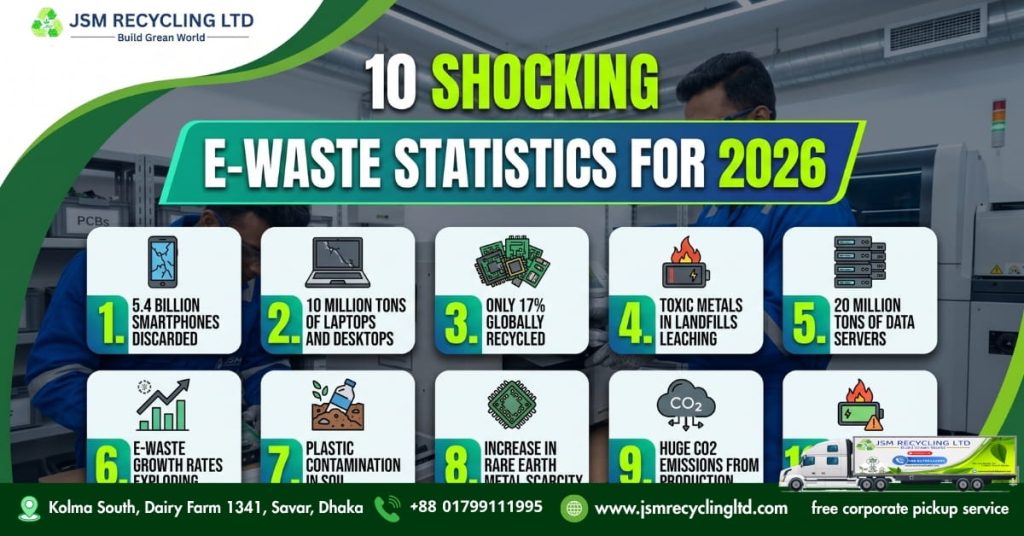
10 Shocking E-Waste Statistics for 2026: Why Your Business Must Act Now
The Digital Dependency Dilemma
In 2026, we’re more connected than ever. Our offices, homes, and pockets overflow with smartphones, laptops, servers, and IoT devices. Yet, with this unprecedented digital dependency comes an equally unprecedented crisis: e-waste statistics reveal that we’re drowning in electronic waste at alarming rates.
Every second, an estimated 2,000+ tons of electronic waste is generated globally. Most of it ends up in landfills, incinerators, or informal recycling operations—poisoning soil, water, and air while squandering valuable materials and exposing sensitive data to theft. E-waste statistics for 2026 paint a sobering picture of an industry that’s grown faster than our collective responsibility to manage it.
The question isn’t whether your organization will contribute to this crisis. The question is: will you take control of your electronic waste responsibly?
10 Shocking E-Waste Statistics That Demand Your Attention
1. Global E-Waste Generation Reaches 65 Million Metric Tons Annually
The world generates approximately 65 million metric tons of electronic waste every year—equivalent to the weight of 8,000 Eiffel Towers. This figure has grown by 23% in the past five years, accelerated by shorter device lifecycles and rapid technological obsolescence. Without intervention, this number will exceed 75 million metric tons by 2030.
2. Only 22% of E-Waste Gets Properly Recycled
Despite global awareness efforts, just 1 in 5 electronic devices reaches certified recycling facilities. The remaining 78% enters unregulated disposal streams, causing severe environmental and public health damage.
3. Lost Material Value Exceeds $57 Billion Annually
E-waste contains precious metals (gold, silver, platinum), rare earth elements, and valuable materials worth an estimated $57 billion globally per year. Currently, only 10% of this material value is recovered, representing an enormous financial and environmental loss.
4. Over 50 Million Tons of E-Waste Ends Up in Developing Nations
Wealthy nations illegally export approximately 37 million tons of electronic waste to developing countries annually, where informal recycling operations expose workers and communities to toxic substances without protective equipment or environmental safeguards.
5. E-Waste Contains 60+ Toxic Substances
Electronic devices contain lead, mercury, cadmium, hexavalent chromium, and brominated flame retardants—hazardous materials that leach into groundwater and accumulate in ecosystems for decades. A single smartphone can release enough mercury to contaminate 580,000 liters of water.
6. Data Breaches from Unrecycled Electronics Cost Businesses $4.45 Million on Average
When electronics aren’t securely destroyed, sensitive data remains vulnerable. Companies that experience data breaches stemming from improperly disposed devices face average remediation costs of $4.45 million, plus reputational damage and regulatory penalties.
7. IT Hardware Disposal Is a Major GDPR and Compliance Risk
Regulatory bodies now require certified proof of secure data destruction. Organizations failing to meet data protection standards face fines up to €20 million or 4% of global revenue—making compliance through professional e-waste services non-negotiable.
8. Mobile Devices Account for 31% of All E-Waste by Volume
Smartphones and tablets represent nearly one-third of global e-waste, driven by annual upgrade cycles and planned obsolescence. The average smartphone contains 60+ grams of rare metals but is replaced every 2-3 years.
9. Manufacturing a Single Laptop Generates 1.5 Tons of CO₂
The carbon footprint of new electronics is staggering. Extending device lifecycles by just 1 year can reduce annual e-waste generation by 5 million tons and corresponding carbon emissions by 25 million metric tons.
10. Companies Without E-Waste Policies Face 3x Higher ESG Ratings Penalties
Institutional investors increasingly scrutinize environmental, social, and governance (ESG) practices. Organizations lacking certified e-waste management programs face downgraded ratings, diverted investment, and stakeholder pressure—affecting stock valuations and market reputation.
Why E-Waste Statistics Matter to Your Business
Compliance & Legal Risk
The regulatory landscape has shifted dramatically. GDPR, HIPAA, SOX, and industry-specific data protection standards all mandate secure IT asset disposition. Non-compliance isn’t just a fine—it’s a breach of fiduciary responsibility.
Data Security & Reputation
Every device your organization discards is a potential backdoor for cybercriminals. E-waste statistics confirm that improperly destroyed hardware is the #2 source of corporate data breaches after phishing. A single breach erodes customer trust irreparably.
ESG Goals & Stakeholder Pressure
Investors, customers, and employees demand corporate accountability. Organizations with certified, transparent e-waste management programs enjoy:
- Enhanced brand reputation
- Improved employee retention
- Increased institutional investment
- Competitive advantage in sustainable procurement contracts
Financial Recovery
Certified recycling programs don’t just dispose of waste—they recover value. Materials from responsibly recycled electronics generate credits that offset disposal costs and contribute to circular economy initiatives.
The JSM Recycling Ltd Advantage: Turning E-Waste into Responsibility
Understanding e-waste statistics is the first step. Taking action is the next. That’s where JSM Recycling Ltd comes in.
Secure Data Destruction You Can Trust
We don’t just recycle electronics—we eliminate data. Every device undergoes certified destruction protocols verified by third-party auditors. You’ll receive detailed Chain of Custody documentation proving complete data erasure or physical destruction.
Certified, Compliant Recycling
JSM Recycling Ltd maintains ISO 14001 Environmental Management Certification and R2 (Responsible Recycling) Certification. We meet or exceed GDPR, HIPAA, and all major regulatory standards. No unknowns. No hidden landfill exports.
Convenient Pickup & Logistics
We come to you. Our fleet provides scheduled pickups for bulk IT assets, eliminating storage headaches and operational disruptions. Whether you’re refreshing 50 devices or 500, we handle logistics seamlessly.
Material Recovery & Reporting
JSM captures the value your e-waste represents. You’ll receive detailed recycling reports showing materials recovered, environmental impact avoided, and value generated. Track your circular economy progress with transparent metrics.
Partnership Beyond Disposal
We’re not a vendor—we’re a partner in your sustainability journey. Our team provides:
- E-waste audits and inventory assessments
- Certified data destruction verification
- ESG reporting support
- End-of-life device planning consultations
The Urgent Call: 2026 is the Inflection Point
E-waste statistics for 2026 reveal we’ve reached a critical juncture. The volume of electronic waste is accelerating, regulations are tightening, and stakeholder expectations are rising. The organizations that act now—establishing responsible, certified e-waste programs—will lead the market.
Those that delay face three converging risks:
- Regulatory penalties as compliance enforcement increases
- Data breach liability from improperly destroyed devices
- Reputational damage from environmental negligence
Your customers, employees, and investors are watching. They want to work with organizations committed to responsible practices—not just profitable ones.
Your Next Step: Take Control of Your E-Waste Crisis
Ready to dispose of your IT assets responsibly and protect your organization’s data, reputation, and bottom line?
Contact JSM Recycling Ltd today to schedule a free e-waste audit and pickup consultation.
Why Act Now?
- Free assessment of your current e-waste inventory
- Custom disposal plan tailored to your compliance needs
- Immediate pickup from your facility
- Certified documentation for regulatory peace of mind
- Transparent reporting to support your ESG initiatives
Don’t let e-waste statistics become your organization’s liability. Partner with JSM Recycling Ltd and turn electronic waste into a competitive advantage.
[Schedule Your Free Consultation] – Call Today or Visit JSM Recycling Ltd
E-Waste Statistics Demand Action
The numbers are undeniable. With 65 million metric tons of electronic waste generated annually, only 22% properly recycled, and billions in lost material value, the e-waste crisis is no longer a future problem—it’s a present emergency.
E-waste statistics of 2026 reveal that organizations can no longer ignore IT asset disposition. Compliance requirements, data security risks, stakeholder pressure, and environmental responsibility all converge on one truth: responsible e-waste recycling isn’t optional—it’s essential.
JSM Recycling Ltd specializes in transforming your e-waste challenge into an opportunity. With certified recycling, secure data destruction, convenient logistics, and transparent reporting, we ensure your organization meets regulatory standards, protects sensitive data, demonstrates environmental commitment, and recovers material value.
The question is no longer whether you’ll address your e-waste problem. The question is: will you partner with the right organization to do it securely, responsibly, and compliantly?
Contact JSM Recycling Ltd now. Your data, your reputation, and your sustainability goals depend on it.
Additional Resources
- ISO 14001 Environmental Management Standards
- R2 Certified Recycling Facilities
- GDPR Data Protection Requirements
- E-Waste Disposal Best Practices Guide
JSM Recycling Ltd is committed to responsible, certified electronic waste recycling. We partner with organizations to meet compliance requirements, protect data security, and achieve sustainability goals.
Frequently Asked Questions About E-Waste Disposal
Q1: What happens to my data when JSM Recycling destroys old devices?
A: Data destruction follows a three-tier approach:
- For reusable hardware: Secure data wiping (NIST 800-88 compliant) verified by independent audits
- For damaged/sensitive devices: Physical destruction (shredding, incineration) rendered unrecoverable
- For highly confidential assets: On-site destruction with witnessed verification
Every process is documented with signed Chain of Custody forms and destruction certificates. You maintain full audit trails for compliance purposes.
Q2: Is e-waste recycling actually better than standard disposal?
A: Absolutely. E-waste statistics clearly demonstrate the difference:
- Standard landfill disposal: Toxins leach for decades, materials vanish, data risks increase
- Certified recycling: 95% of materials recovered, hazardous substances neutralized, data permanently destroyed, carbon footprint reduced by 90%
Additionally, certified recycling generates material credits and ESG value your organization can leverage.
Q3: How much does professional e-waste disposal cost compared to municipal programs?
A: This is a false economy. While municipal programs may seem cheaper upfront, they:
- Don’t verify data destruction (compliance liability on you)
- Export 60% of waste to developing nations illegally
- Provide no material recovery documentation
- Offer zero audit trail for regulatory inspections
JSM’s transparent pricing reflects the true value of compliant, secure, and responsible disposal. Most organizations recoup costs through material recovery and avoided compliance penalties.
Q4: Can we claim tax deductions or ESG credits for responsible e-waste recycling?
A: Yes, in many jurisdictions. Certified e-waste recycling qualifies for:
- Charitable donation deductions (when equipment has residual value)
- Environmental tax credits (varies by region and organization type)
- Sustainable business incentives (some municipalities offer rebates for certified programs)
- ESG scoring improvements (documented compliance boosts investor ratings)
JSM provides detailed documentation supporting all claims. We recommend consulting with your tax and sustainability officers for specific qualification details.