
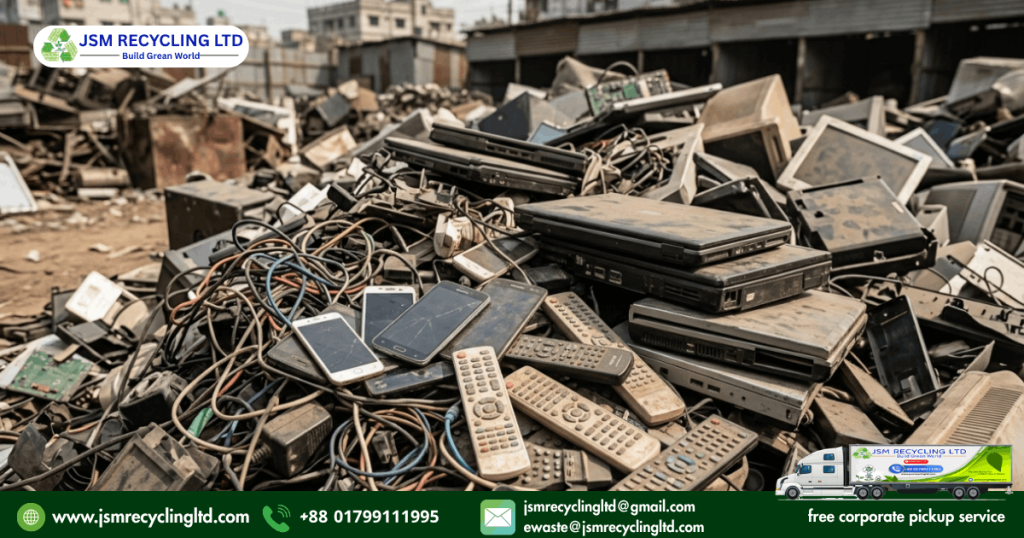
E-waste in Bangladesh is growing fast because of rising smartphone and gadget use, and most of it is still handled by informal scrap dealers using unsafe methods like open burning and acid leaching. This releases toxic chemicals into the air, soil, and water, harming public health and the environment. The safest solution is to recycle through a government-authorized, data-destruction-certified company like JSM Recycling Ltd, which offers 100% landfill-free processing. Acting now protects both your data and your community.
E-Waste in Bangladesh: Why This Growing Crisis Threatens Your Health and Environment
E-waste in Bangladesh has quietly become one of the country’s most urgent environmental problems. Every broken phone, old laptop, and dead television you throw away adds to a mountain of electronic waste that most people never think twice about. But behind that old charger drawer is a real risk — to your health, your data, and the environment around you.
In this guide, you’ll learn what e-waste actually is, why it’s dangerous, how big the problem is in Bangladesh, and exactly what you can do about it — safely and legally.
What Is E-Waste and Why Does It Matter?
E-waste, short for electronic waste, is any discarded device that runs on electricity or batteries — from phones and laptops to air conditioners and CFL bulbs. It matters because these devices contain toxic materials like lead, mercury, and cadmium, which can poison soil and water if thrown away carelessly instead of being processed through proper electronic recycling services.
A Simple Definition
Think of e-waste as anything with a plug, battery, or circuit board that no longer works or is no longer wanted. This includes obvious items like smartphones and computers, but also less obvious ones like electric toothbrushes, routers, and old inverters.
Common Examples of E-Waste
Most Bangladeshi households and offices generate e-waste without realizing it. Common examples include broken mobile phones, outdated laptops and desktops, dead batteries, old televisions, printers, and small kitchen appliances. Even cables and chargers count once they’re no longer usable.
Community Engagement and Awareness Programs
A crucial element of JSM Recycling Limited’s success in promoting sustainable waste management lies in its strong commitment to community engagement and awareness programs. Recognizing that true environmental change begins at the grassroots level, JSM Recycling actively collaborates with local communities, schools, and organizations to educate and empower individuals about the importance of responsible waste disposal and recycling practices.
Through interactive workshops, educational campaigns, and hands-on activities, JSM Recycling fosters a culture of environmental stewardship among residents of various age groups. These programs not only highlight the environmental and economic benefits of recycling but also provide practical guidance on how to segregate waste effectively and reduce overall waste generation. By involving community members directly, JSM Recycling ensures that sustainable habits become a shared responsibility, creating a ripple effect that extends beyond immediate neighborhoods.
Moreover, the company frequently partners with local governments and NGOs to organize clean-up drives, tree-planting events, and awareness rallies that reinforce the message of sustainability while strengthening community bonds. These initiatives play a vital role in shifting public attitudes toward waste, encouraging proactive participation, and building a greener, cleaner Bangladesh for future generations. Through its dedication to community engagement, JSM Recycling Limited continues to inspire collective action, proving that sustainable waste management is not just a corporate goal but a community-wide mission.
The Main Types of E-Waste
Understanding the categories of e-waste helps you know what needs special handling. Electronic waste generally falls into four broad groups:
- IT and Telecom Equipment — laptops, desktops, mobile phones, routers, and hard drives
- Large Household Appliances — refrigerators, air conditioners, washing machines
- Small Household Appliances — kettles, irons, electric fans, toys with electronics
- Lighting and Batteries — CFL bulbs, LED fixtures, rechargeable and lithium batteries
Each category carries different risks. Batteries and IT equipment, for example, are especially hazardous because of the heavy metals and data storage components inside them.
Why E-Waste Is Dangerous — For You and the Environment
Improperly handled e-waste doesn’t just disappear — it breaks down into harmful substances that affect people and ecosystems for years.
The Health Impact on People
When e-waste is burned or dismantled by hand, it releases toxic fumes containing lead, mercury, and brominated flame retardants. Workers and nearby residents — often including children — can suffer from respiratory illness, skin conditions, and long-term neurological damage from repeated exposure.
The Environmental and Business Impact
Toxic runoff from broken devices contaminates soil and groundwater, making land unsafe for farming and drinking water unsafe for communities. For businesses, improper disposal can also mean regulatory penalties, reputational damage, and lost customer trust — especially as clients increasingly expect responsible environmental practices.
The Hidden Danger: Your Data Isn't Gone
Here’s what most people don’t realize — deleting files or doing a factory reset does not permanently erase your data. Old hard drives and phones handed to informal scrap dealers can still contain recoverable personal photos, banking details, and business files, creating a serious data security and identity theft risk.
E-Waste in Bangladesh: The Local Reality
Bangladesh’s e-waste problem is growing faster than most people realize, and the country’s informal recycling sector is struggling to keep up safely.
How Big Is the Problem in Bangladesh?
Bangladesh generates an estimated 3 million metric tons of e-waste per year, and this figure is rising by nearly 20% annually — Bangladesh Department of Environment (DoE), 2025. Dhaka alone accounts for a large share of this volume, driven by rapid smartphone adoption and short device lifecycles.
What Is Happening Right Now in Bangladesh?
Roughly 50% of Bangladesh’s e-waste is still processed by informal scrap yards, mostly concentrated around areas like Old Dhaka — Global E-Waste Monitor, 2025. Workers in these yards often use open burning and acid baths to extract valuable metals like copper and gold, with little to no protective equipment.
Why Informal Methods Are Dangerous and Failing
Informal recycling recovers materials but ignores the toxic byproducts left behind. Without licensed data destruction, filtration systems, or landfill-free processing, informal methods leave behind pollution and expose workers to hazards that certified recyclers are specifically equipped to prevent.
How to Safely Recycle E-Waste in Bangladesh
Protecting yourself, your data, and your community starts with choosing the right disposal method. Follow these steps:
- Back up any important files from your old device before disposal.
- Wipe or physically destroy storage drives — or use a certified data destruction service.
- Remove batteries separately, since they require different handling than the main device.
- Choose a government-authorized recycler instead of an informal scrap dealer.
- Request a certificate of recycling or data destruction for your records, especially for businesses.
- Schedule a pickup or drop-off through a trusted, landfill-free recycling company.
Safe vs. Unsafe E-Waste Disposal Methods
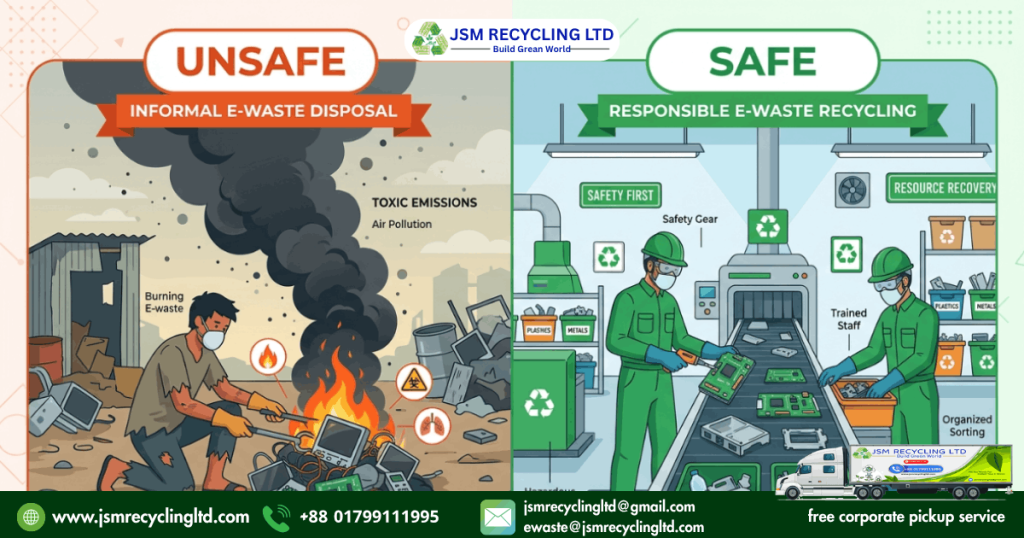
Factor | Informal Scrap Dealer | Certified Recycler (e.g., JSM Recycling) |
Data Security | No data destruction | |
Environmental Impact | Open burning, toxic runoff | 100% landfill-free processing |
Legal Compliance | Not government-authorized | |
Worker Safety | No protective standards | Controlled, safe facilities |
Proof of Disposal | None provided | Certificate issued |
Why Choose a Government-Authorized Company
A government-authorized recycler follows environmental regulations set by the Department of Environment, meaning your e-waste is processed legally, safely, and transparently — protecting you from both environmental harm and potential legal liability.
How JSM Recycling Ltd Is Solving Bangladesh's E-Waste Problem
JSM Recycling Ltd was built specifically to close the gap between Bangladesh’s growing e-waste crisis and the lack of safe disposal options.
Responsible Recycling
With over 8 years of experience, JSM Recycling Ltd operates a 100% landfill-free process, meaning no electronic waste collected is ever dumped — everything is responsibly processed or repurposed.
Government Authorized and Data Destruction Certified
JSM Recycling Ltd is officially authorized by Bangladesh’s Department of Environment and provides verified data destruction certificates, giving individuals and businesses documented proof that their devices — and their data — were disposed of safely and legally.
Free Corporate Pickup and Community Drop-Off Events
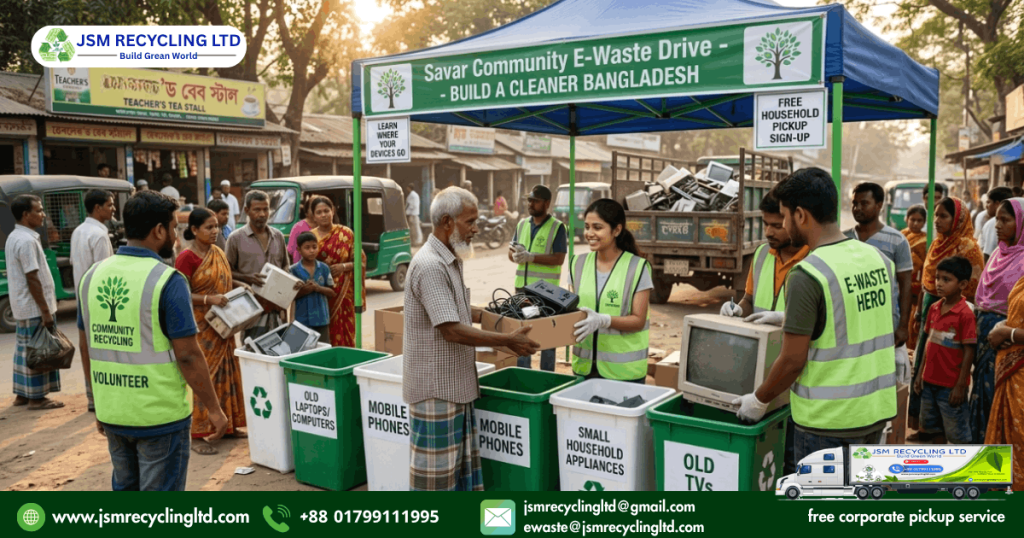
JSM Recycling Ltd has hosted 130+ community events across Bangladesh, making safe e-waste disposal accessible to everyday people, alongside free pickup services for businesses looking to responsibly clear out old IT equipment.
Take Action on E-Waste in Bangladesh Today
E-waste in Bangladesh is a growing crisis fueled by informal, unsafe disposal methods that put your health, data, and environment at risk. The solution is simple: recycle through a government-authorized, data-destruction-certified, and 100% landfill-free company instead of handing devices to unregulated scrap dealers.
Contact JSM Recycling Ltd today — Bangladesh’s only 100% landfill-free, government-authorized e-waste recycling company. Schedule your free corporate pickup or find your nearest community drop-off event at jsmrecyclingltd.com.
Frequently Asked Questions
Q: What is e-waste?
E-waste is any electronic device or accessory that has been discarded because it’s broken, outdated, or no longer wanted. This includes phones, laptops, batteries, and household appliances with electronic parts.
Q: Is e-waste actually dangerous?
Yes. E-waste contains toxic materials like lead and mercury that can pollute soil and water if burned or dumped improperly. It also poses a data security risk if personal information isn’t destroyed before disposal.
Q: Is it illegal to dispose of e-waste incorrectly in Bangladesh?
Bangladesh’s Department of Environment regulates e-waste disposal, and improper handling by unauthorized parties can carry legal and environmental penalties. Using a government-authorized recycler keeps you compliant.
Q: How can I recycle my old electronics in Bangladesh?
You can contact a government-authorized recycler like JSM Recycling Ltd for a free corporate pickup or visit one of their community drop-off events held across the country.
Q: Does JSM Recycling provide a certificate after recycling?
Yes. JSM Recycling Ltd issues verified data destruction and recycling certificates, giving individuals and businesses documented proof of safe, compliant disposal.