
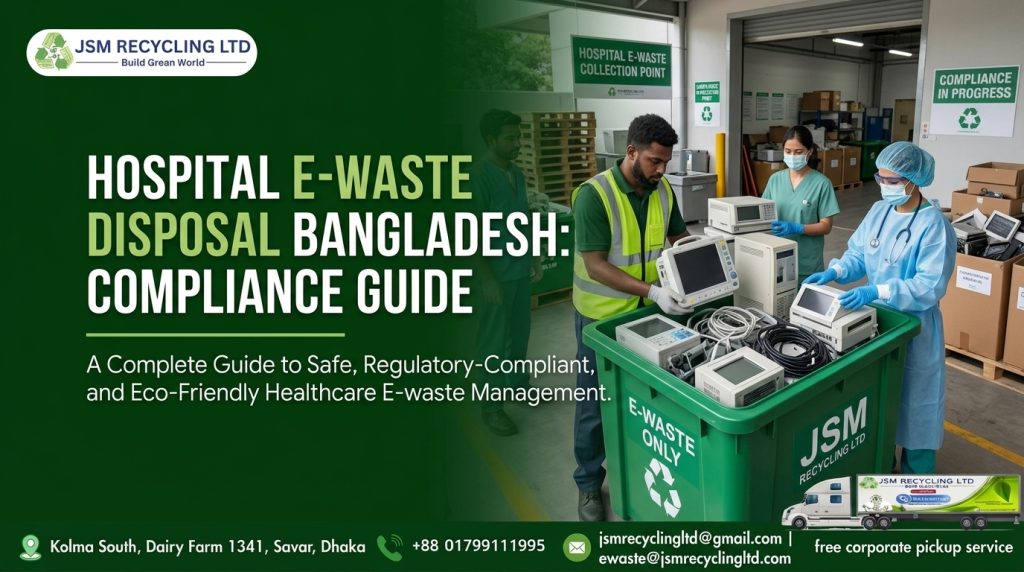
Hospital and Clinic E-Waste Disposal in Bangladesh: A Compliance Guide
Hospital e-waste disposal in Bangladesh means retiring old computers, servers, drives, and devices without exposing patient data or harming the environment. Inventory your assets, destroy stored data, use a licensed recycler, and keep a Certificate of Destruction. Verify current rules with the Department of Environment.
Hospitals and clinics replace electronics often. Old computers, servers, workstations, and storage drives pile up in storerooms. Many of them still hold patient records. Safe hospital e-waste disposal Bangladesh facilities can rely on needs two things: data protection and licensed recycling. This guide explains the risks, the steps, and the records you should keep. It is written for hospital administrators, IT managers, and compliance officers.
What Counts as Hospital E-Waste?
Hospital e-waste is any retired electronic equipment from a healthcare facility. It includes office IT gear and many everyday devices.
Common items include:
- Desktop computers, laptops, and tablets
- Servers and storage drives
- Network switches and routers
- Printers, scanners, and photocopiers
- Mobile phones used by staff
- Batteries and UPS units
- Billing and reception terminals
Some medical equipment also stores data. Examples include imaging workstations and monitoring consoles that connect to a computer. Check with the equipment maker or your biomedical team before you dispose of any such device.
Why Hospital E-Waste Needs Extra Care
A clinic is not an ordinary office. Its devices hold personal, sensitive, and often confidential information. A single lost drive can expose many patients.
Electronics also contain materials that harm the environment when dumped. Batteries, circuit boards, and screens need proper handling. Landfills and open burning are not safe options.
Hospital e-waste disposal Bangladesh teams handle therefore carries two duties:
- Protect patients. Destroy stored data before devices leave your control.
- Protect the environment. Send devices to a licensed recycler.
Data Risks in Healthcare Devices
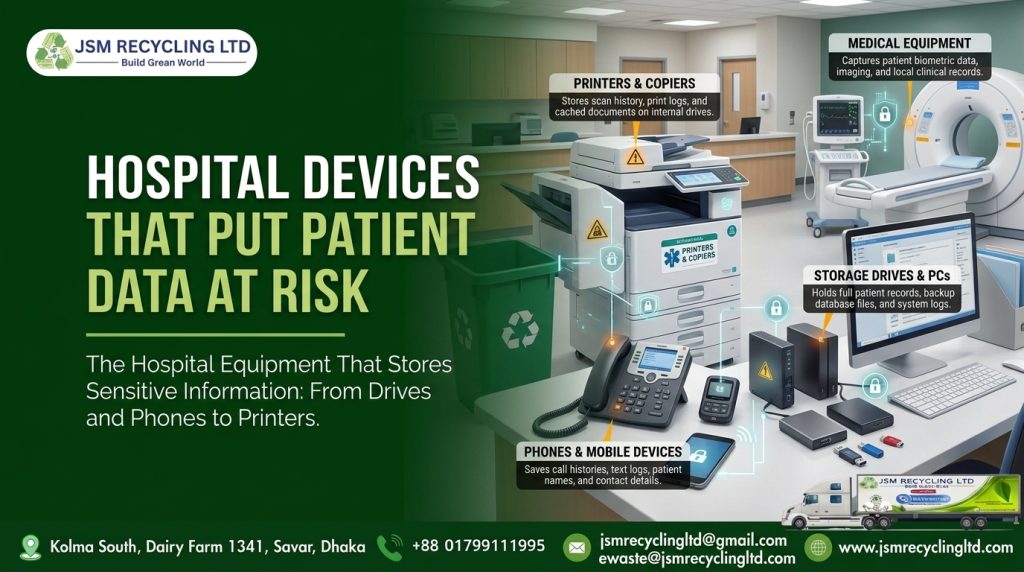
Patient data hides in more places than most teams expect. Check each of these before disposal.
Where Data Is Stored
- Hard drives and SSDs in desktops and servers
- Backup drives and tapes
- Shared drives in reception and billing
- Printers and copiers with internal storage
- Staff phones with email and messaging apps
- Imaging and lab workstations
What Can Go Wrong
Deleted files can often be recovered. A formatted drive is not a destroyed drive. Informal buyers may restore data and misuse it.
Learn the difference between deleting and destroying data before you rely on any quick fix.
A Compliance Checklist for Hospitals and Clinics
Use this checklist to build a clear, auditable process.
- Keep an asset register. Record the make, model, serial number, and location of each device.
- Assign an owner. Name one person who approves every disposal.
- Check retention needs. Confirm what records you must keep and for how long.
- Separate data-bearing items. Tag drives, phones, and servers for destruction.
- Use a licensed recycler. Ask for proof of licenses and certifications.
- Record chain of custody. Log who handled each item and when.
- Collect proof. Keep a Certificate of Destruction and a completion report.
- Review the process yearly. Update your policy when rules or equipment change.
Read more about secure data destruction in Bangladesh to see how this fits your policy.
Step by Step: Safe Disposal Process
- Take inventory. List all retired devices and mark those that store data.
- Back up what you need. Move required records to approved systems. Test the backup.
- Confirm approval. Get sign-off from IT, management, and the compliance owner.
- Remove access. Revoke accounts, keys, and network permissions for each device.
- Pack and label. Seal devices in marked boxes. Record the count and serial numbers.
- Hand over to a licensed partner. Sign a handover record and log the chain of custody.
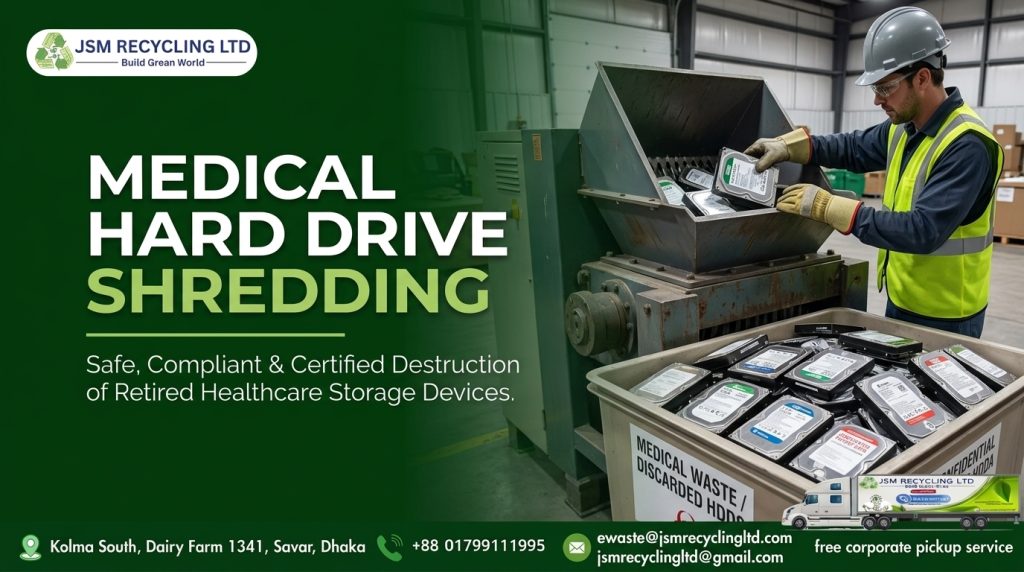
- Destroy the data. The provider destroys drives and storage media with a verified method.
- Recycle the hardware. Remaining parts go to licensed e-waste processing.
- Collect your records. File the Certificate of Destruction and completion report.
- Update the asset register. Mark each item as retired.
Handle Batteries Separately
UPS units and backup batteries need special care. Do not mix them with general waste. Read the battery recycling guide for Bangladesh for more detail.
Do Not Forget Staff Phones
Staff phones often hold patient messages and images. Include them in your process. A mobile shredding service can destroy phones that hold sensitive data.
Choosing a Disposal Partner: Options Compared
Hospitals have several options for old equipment. The right choice protects data and gives you records.
Option | Data security | Paper trail | Environmental handling |
Informal scrap buyer | Low. Drives often stay intact | Usually none | Unknown |
Selling to a reseller | Depends on the buyer | Often limited | Varies |
Keeping in storage | Risk remains over time | Internal only | Not resolved |
Licensed e-waste recycler | Verified data destruction | Certificate and report | Controlled process |
Storing old devices does not remove the risk. It only delays the decision. A licensed recycler gives you a documented end to each device’s life.
Bangladesh Context: Risks, Rules, and Local Needs
Local Risks
Many facilities keep retired computers in storerooms for years. Others pass them to informal scrap buyers. These routes rarely give records, and patient data may remain on the drives.
Rules in General Terms
Environmental rules apply to e-waste in Bangladesh. Health sector bodies and other regulators may also expect proper handling of patient records and equipment. Rules change over time. Verify the current rules with the Department of Environment and your sector regulator before you dispose of any equipment.
Local Business Needs
Large hospitals run many sites and departments. Small clinics have limited IT staff. Both need a simple process, a clear owner, and a partner that collects from the site.
For a wider view of the topic, read the e-waste management guide for Bangladesh. Banks and hospitals face similar record needs. See how secure IT asset disposal for banks in Bangladesh works for ideas you can adapt.
How JSM Recycling Ltd Helps
JSM Recycling Limited is a certified e-waste recycler in Bangladesh. We hold ISO 14001:2015, ISO 45001:2018, and ISO 9001:2015 certifications, along with R2. We are BTRC Authorized and licensed by the Department of Environment. You can review them on our certifications page.
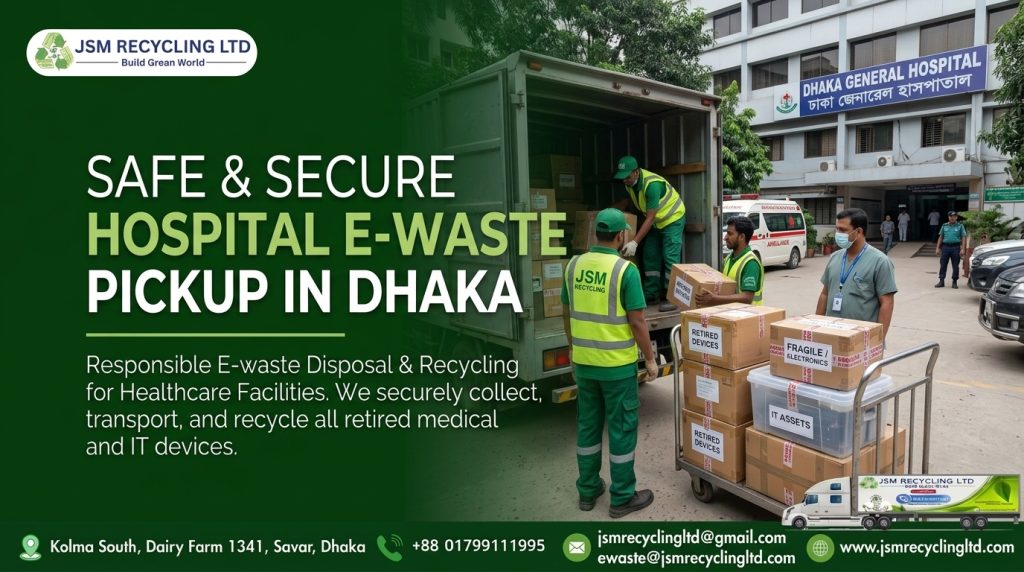
Pickup is free for businesses, including hospitals and clinics. Our team collects your retired devices and carries out certified hard drive data destruction. Remaining hardware goes into responsible recycling. You receive a Certificate of Destruction and a completion report with photos and video of the process. Recycling is completed within 7 working days.
This gives your compliance file a clear, documented record.
Safe hospital e-waste disposal Bangladesh facilities can defend in an audit needs a plan. Inventory your devices. Destroy patient data. Use a licensed recycler. Keep your proof.
To arrange hospital e-waste disposal Bangladesh clinics and hospitals can trust, call or WhatsApp JSM Recycling Ltd on +88 01799111995. You can also email ewaste@jsmrecyclingltd.com or use the contact page.
FAQ SECTION
How do hospitals dispose of e-waste in Bangladesh?
Hospitals should inventory retired devices, destroy stored patient data, and hand equipment to a licensed e-waste recycler. They should record the chain of custody and keep a Certificate of Destruction. Verify current rules with the Department of Environment before disposal. Do not give devices to informal scrap buyers.
Is hospital e-waste hazardous?
Parts of it can be. Batteries, circuit boards, and screens contain materials that harm people and the environment if dumped or burned. Retired devices may also hold sensitive patient data. Use a licensed recycler to handle both the material risks and the data risks.
How should clinics destroy patient data on old computers?
Remove the drives and destroy the data with a verified method, such as physical shredding. Deleting files or formatting a drive is not enough. Use a certified provider and keep the Certificate of Destruction in your records as proof the data cannot be recovered.
Can hospitals sell old computers and servers?
Yes, but only after the data is securely destroyed or verifiably wiped. Selling devices with data intact creates serious risk. Many hospitals choose physical destruction for drives and recycle the rest. Keep records for every device that leaves your premises.
What records should a hospital keep after e-waste disposal?
Keep an asset list, handover and chain-of-custody records, a Certificate of Destruction, and a completion report. Photos or video of the process add support. File them with your audit records and keep them as long as your policy or regulator requires.
Are staff mobile phones part of hospital e-waste?
Yes. Staff phones can hold patient messages, images, and contacts. Include them in your disposal policy. Remove access, back up what you need, and destroy phones that hold sensitive data. Use a certified provider and keep proof of destruction.
Does JSM Recycling Ltd serve hospitals and clinics?
Yes. JSM Recycling Ltd offers free pickup for businesses, certified hard drive data destruction, and e-waste recycling. You receive a Certificate of Destruction and a completion report with photos and video. Recycling is completed within 7 working days. Call or WhatsApp +88 01799111995 to book.